
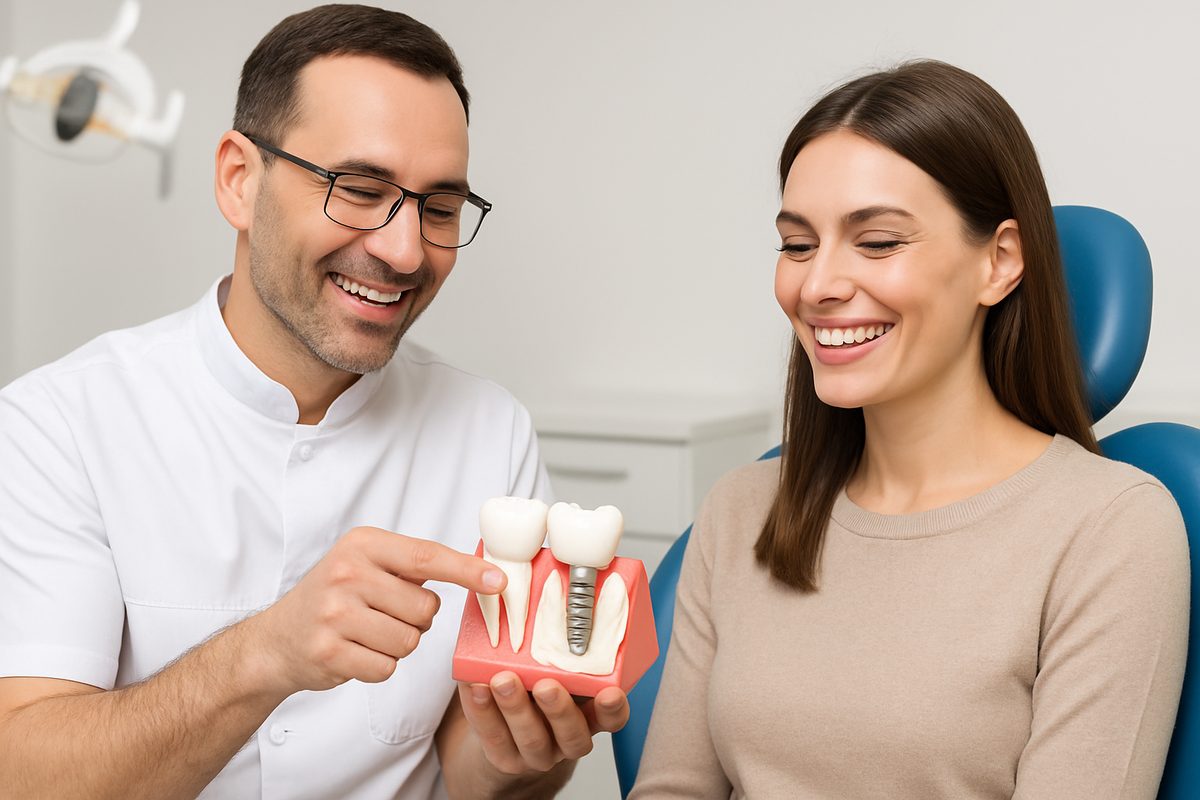
A dental implant is a titanium post placed in the jaw to hold a crown, bridge, or denture. Many people choose to replace missing tooth because implants restore biting power, look natural, and help prevent bone loss. This quick guide covers the benefits, who is a good candidate, alternatives, the treatment steps, risks, and simple next steps so you can decide if you want to replace missing tooth in New Bedford, MA.
Why replace missing tooth with a dental implant?
Restore chewing, speech, and confidence
A single implant topped with a crown looks and functions much like a natural tooth. Chewing becomes easier, speech can improve, and many patients report feeling more confident smiling and eating in public after they replace missing tooth.
Preserve jawbone and nearby teeth
When a tooth is lost, the jawbone starts to shrink. An implant stimulates the bone, helping preserve facial structure. Unlike a bridge, an implant does not require grinding down adjacent healthy teeth to support the restoration.
Durability and long-term value compared to other options
Implants are designed to last many years with proper care. While the upfront cost can be higher than bridges or dentures, implants often deliver better long-term value due to fewer replacements and better function.
Who is a good candidate to replace missing tooth?
Oral health basics: gum disease and tooth decay
Healthy gums and control of tooth decay are important before placing an implant. Active gum disease must be treated first to reduce the risk of implant failure.
Bone volume and when bone grafting may be needed
Enough jawbone is needed to hold the implant. If bone has resorbed, grafting can rebuild the ridge so you can replace missing tooth in New Bedford, MA with predictable results.
Medical factors: smoking, diabetes, medications
Smoking, uncontrolled diabetes, or certain medications can affect healing. These don’t always rule out implants but may require medical clearance or extra precautions.
Other options if you can’t replace missing tooth with an implant
Fixed dental bridge — pros and cons
A bridge replaces a missing tooth without surgery. It’s faster and can be less expensive up front, but it requires altering adjacent teeth and does not stop bone loss at the missing site.
Removable partial denture — short-term vs. long-term use
Partial dentures are noninvasive and cost-effective for short-term needs. Long-term use can be less comfortable and may accelerate bone changes or place stress on nearby teeth.
When alternative options are appropriate
Bridges or dentures may be best when bone or health issues prevent implants, or when the patient prefers a non-surgical solution.
What to expect during the dental implant process
Initial consult and imaging (CBCT 3D scans)
Your visit starts with an exam and 3D imaging (CBCT) to plan implant position and check bone. This helps determine if you can replace missing tooth in New Bedford, MA and whether grafting is needed.
Surgical placement — guided or robotic techniques, sedation options
Implant surgery can be done with guided planning or robotic assistance for precision. Sedation options range from local anesthesia to conscious sedation for comfort.
Healing, abutment placement, and final crown restoration
After placement, the implant integrates with bone over weeks to months. An abutment is attached, then a custom crown is placed to restore function and appearance.
Risks, aftercare, and how long implants last
Common risks and how they’re managed
Risks include infection, nerve irritation, or sinus issues. Proper planning, sterile technique, and follow-up care reduce these risks.
Daily care: cleaning, checkups, and preventing peri-implantitis
Brush, floss, and see your dentist regularly. Professional cleanings and early treatment of gum problems help prevent peri-implantitis.
What affects implant longevity
Oral hygiene, smoking, systemic health, and quality of the restoration all influence how long implants last. Many last decades with good care.
Why choose Aarohi Dental for implant treatment (light practice note)
Aarohi Dental in New Bedford, MA offers implant care led by Dr. Sathish G. Palayam and Dr. Minal Narayan. The team focuses on patient education, predictable results, and long-term oral health.
Key technologies they use
Yomi robotic guidance, CBCT/3D imaging, computer-guided implant planning, LANAP laser for gum health, and on-site restorative services.
Next steps: how to start if you want to replace missing tooth
Questions to ask at your consultation
Ask about implant options, success rates, required imaging, the timeline, sedation choices, and costs or financing.
What to bring and how to check financing/insurance
Bring medical history, a list of medications, and any dental records. Ask the office about payment plans and whether insurance helps cover parts of the treatment. If you’re ready to replace missing tooth in New Bedford, MA, schedule a consult to review your options and get a personalized plan.

