
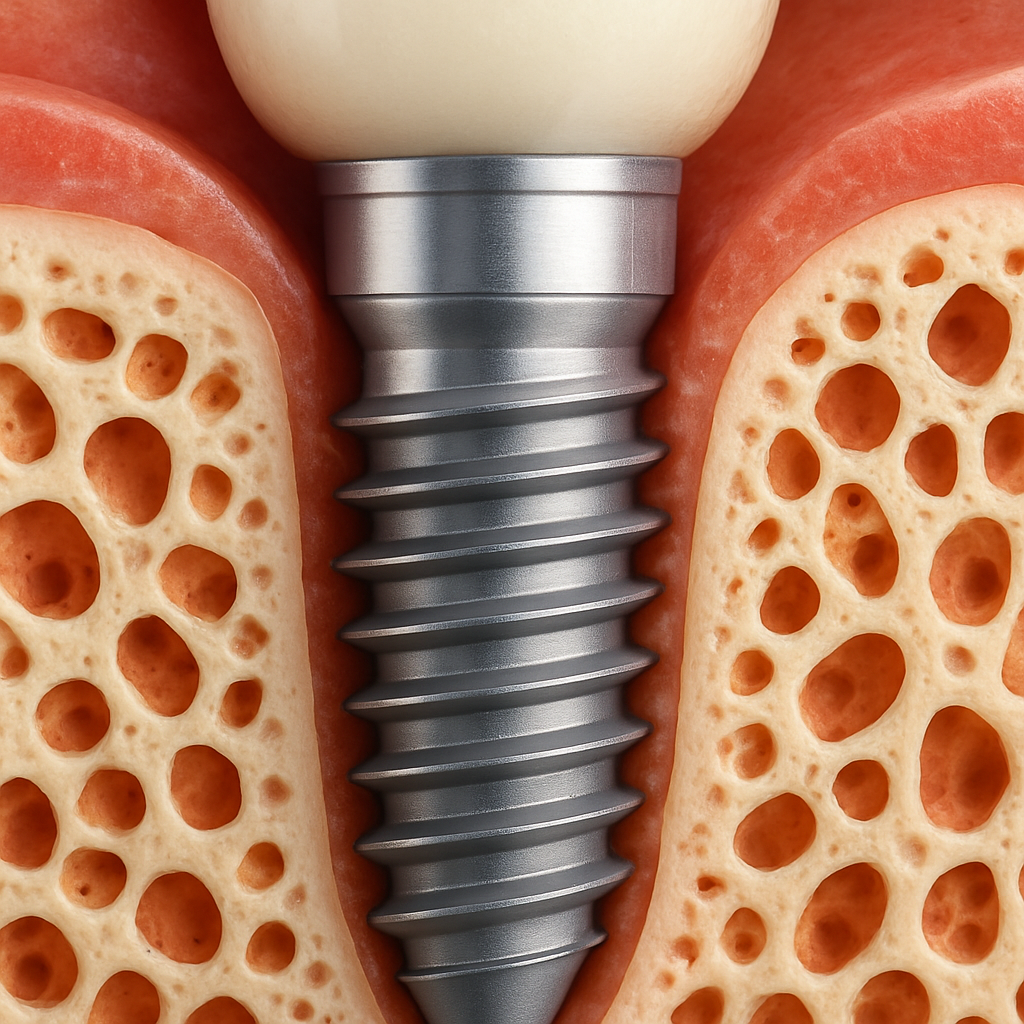
Implant oral surgery replaces missing teeth by placing a strong titanium root in the jaw and attaching a tooth crown, dental bridge, or full-arch prosthesis. It helps people with one or many missing teeth, loose dentures, or bone loss that affects chewing, speech, and confidence. This article explains what implant oral surgery is, common procedures, how technology improves outcomes, benefits and risks, who qualifies, how to prepare, recovery, cost and financing, and next steps for booking a consult.
What is implant oral surgery?
Implant oral surgery is a surgical process to place a titanium implant into the jawbone where a natural tooth is missing. Over time the bone bonds to the dental implant (osseointegration), creating a stable base for a tooth crown, dental bridge, or full-arch prosthesis. Dental implants act like natural tooth roots, restoring chewing, speech, and facial support while helping prevent bone loss that comes with missing teeth.
Common implant oral surgery procedures
Single-tooth implant
A single-tooth implant replaces one missing tooth with a dental implant and a custom tooth crown. The dental implant is placed in the jaw, allowed to integrate, and then restored with a tooth crown that matches nearby teeth. This avoids altering healthy neighboring teeth like a traditional bridge.
Multiple dental implants and implant-supported bridges
When several teeth are missing, two or more dental implants can support a fixed bridge. Implant-supported bridges are more stable than removable partials, feel more natural, and distribute bite forces more evenly. They can restore long spans without relying on adjacent teeth for support.
Full-arch solutions (All-on-4 / fixed full-arch)
Full-arch solutions use strategically placed dental implants to support an entire upper or lower set of teeth. All-on-4 and fixed full-arch options can sometimes offer immediate-load restorations so patients leave with functional teeth the same day. These restorations provide a fixed, denture-like result with improved chewing, speech, and stability.
Bone grafts and sinus lifts
If the jaw lacks enough bone for stable dental implants, bone grafting or sinus lift procedures add needed volume. Bone grafts use donor materials or bone from another site to build up the jaw. Sinus lifts raise the sinus floor and add bone in the upper jaw. These steps create a strong foundation for long-term dental implant success.
How advanced technology improves implant oral surgery
CBCT 3D imaging maps bone, nerve positions, and sinus anatomy to plan safe, precise implant placement. Computer-guided dental implant placement uses digital plans to guide the drill and implant into the exact planned position. Robotic guidance systems add real-time feedback and haptic control for minimally invasive, accurate surgery. Together, these technologies reduce complications, shorten surgical time, and help speed recovery.
Benefits of implant oral surgery
Dental implants restore chewing power and clear speech, often better than removable dentures. They look and feel like natural teeth and support facial structure by preventing bone loss. Dental implants are durable and can last many years with good care. Because they don’t rely on nearby teeth for support, they help preserve healthy tooth structure and improve overall oral health.
Who is a good candidate for implant oral surgery?
Good candidates are in generally good health, have adequate jawbone, and practice consistent oral hygiene. Limiting factors include heavy smoking, uncontrolled diabetes, certain medications that affect bone healing, or active untreated gum disease. Many limiting conditions can be managed—quitting smoking, controlling medical issues, treating gum disease, or adding bone grafts—so a consult with imaging and medical review determines candidacy.
Preparing for implant oral surgery
Preparation begins with a consultation, medical history review, and CBCT imaging to map bone and anatomy. A treatment plan outlines the type of implant, number needed, timing, and any preparatory steps like grafting. Sedation options are discussed if needed. Before surgery you may be asked to avoid certain medications, fast if sedation is planned, and arrange transportation for post-op recovery.
Recovery and aftercare after implant oral surgery
Typical recovery includes mild to moderate swelling and discomfort for a few days, controlled with prescribed or over-the-counter pain meds and ice. A soft-food diet and gentle oral hygiene help protect the surgical site. Follow-up visits check healing and remove sutures if needed. Osseointegration takes weeks to months before final restorations are placed. Good oral care and regular dental visits support long-term success.
Risks, complications, and how they’re minimized
Possible complications include infection, nerve irritation, sinus issues, or dental implant failure. Careful planning with CBCT, computer-guided or robotic assistance, sterile technique, and experienced surgical teams reduce these risks. Addressing medical conditions, quitting smoking, and following pre- and post-op instructions also lower complication rates. If problems arise, prompt care and experienced clinicians help resolve issues.
Cost and financing options for implant oral surgery
Costs vary by procedure complexity, number of dental implants, and need for grafting or temporary restorations. Many patients use dental financing, in-office payment plans, or third-party loan companies to make treatment affordable. Some dental insurance plans may cover portions of treatment like crowns or extractions; confirm benefits early and ask about available financing during your consult.
Why choose Aarohi Dental for implant oral surgery near New Bedford, MA
Aarohi Dental provides implant oral surgery near New Bedford, MA with advanced tools that improve accuracy and comfort. The team uses CBCT 3D imaging, computer-guided planning, and Yomi robotic guidance to place dental implants precisely and minimally invasively. The practice also offers LANAP periodontal therapy and a multidisciplinary team—including Dr. Sathish G. Palayam and Dr. Minal Narayan—so restorative and surgical care are coordinated for predictable, long-lasting results.
What Is Implant Oral Surgery? Learn the Process and Book a Consult
Bring a list of current medications, medical history, and any dental x-rays you have to your first visit. The consult includes a health review, CBCT imaging if needed, and a clear treatment plan with options and costs. Ask about sedation, healing timelines, and financing. To request an appointment or learn about financing, contact us to set a consult and start planning implant oral surgery.

