
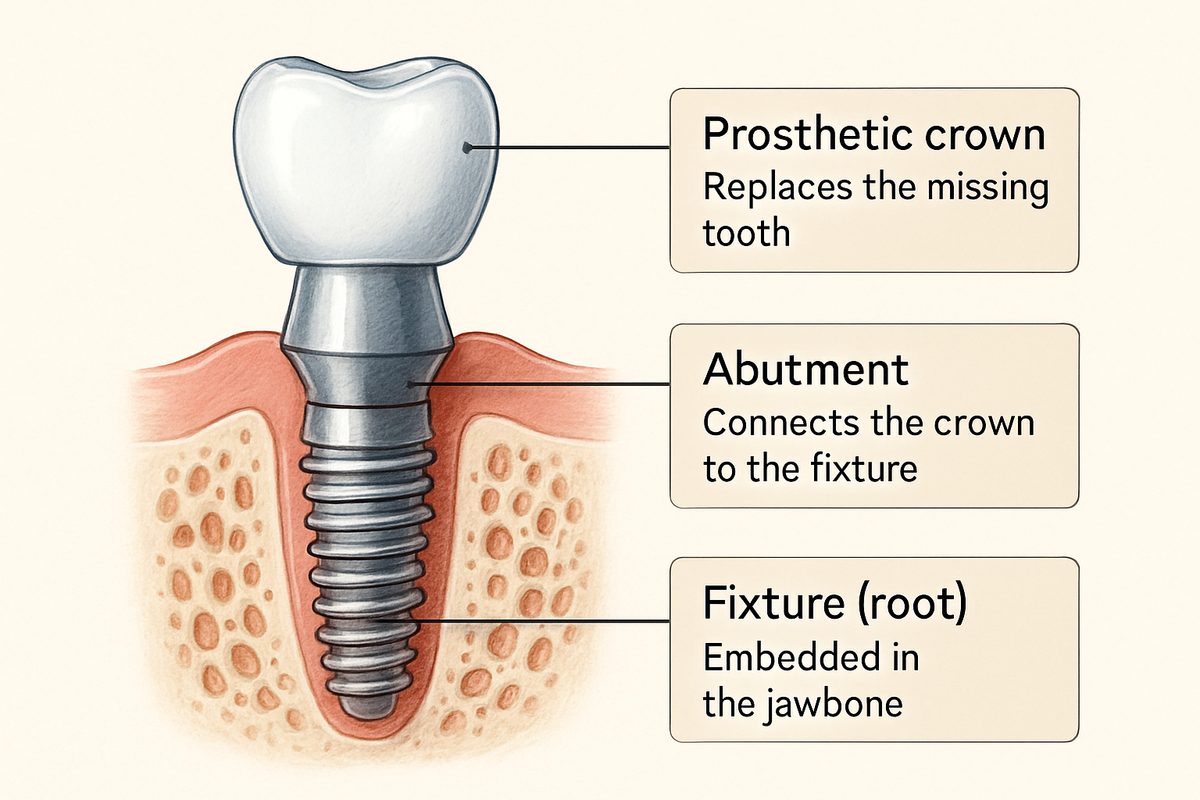
Before you get a dental implant, it helps to know the parts and how they work. This guide explains the anatomy of a dental implant, why each part matters, what can affect success, how to care for implants, and which questions to ask your dentist so you can make an informed choice.
What is a dental implant?
A dental implant is an artificial tooth root placed into the jaw to support a crown, bridge, or denture. Implants replace missing tooth roots to restore chewing, speech, and appearance. Understanding the anatomy of a dental implant helps you know what to expect during surgery and recovery.
The three main parts: fixture, abutment, crown
The implant fixture (root)
The fixture is the screw-like post placed into the jawbone. It’s usually titanium or zirconia. The fixture provides stability and, over months, bonds with bone through osseointegration to act like a natural tooth root.
The abutment
The abutment connects the fixture to the visible tooth. It can be metal or ceramic and affects how the crown fits and how easy it is to clean around the implant. A secure, well-designed abutment helps protect the soft tissue seal.
The prosthetic crown or denture
The visible part is the crown or implant-supported denture. Crowns are commonly porcelain or zirconia for a natural look and durability. The prosthetic restores bite function and esthetics and is shaped to match your other teeth.
Other implant types and designs to know
Implants vary by design and placement. Endosteal implants sit in the bone; subperiosteal sit on the bone under the gum. Treatment can be a single-tooth implant, an implant-supported bridge for several missing teeth, or a full-arch solution like All‑on‑4 for complete tooth replacement.
How the parts work together: biology and function
Osseointegration bonds the fixture to bone for long-term support. The abutment creates a seal with the gum to keep bacteria out. The crown restores chewing and speech. When all parts are planned and placed correctly, implants function like natural teeth and protect surrounding bone.
Factors that affect implant anatomy and success
Bone volume, gum health, and medical conditions (diabetes, autoimmune disease) affect what implant anatomy is possible. Smoking slows healing. Low bone may require bone grafts or sinus lifts, which change the surgical plan and timing. Good overall health improves outcomes.
Care, maintenance, and signs of problems
Clean implants daily with a soft brush and floss or interdental brushes. Keep routine dental visits for professional cleanings and checks. Watch for redness, bleeding, persistent pain, loose crowns, bad taste, or swelling—these can signal peri-implantitis or failure. Early treatment (deep cleaning, antibiotics, laser therapy, or surgical care) improves the chance of saving the implant.
Choosing a provider: what to ask and what tech helps
Ask about the dentist’s implant experience, complication rates, and who does the restoration. Request to see before-and-after cases. Key technologies that improve planning and outcomes include CBCT/3D imaging, computer-guided placement, and robotic guidance like Yomi.
About Aarohi Dental and our implant approach
Aarohi Dental (New Bedford) offers implant care using advanced tools such as Yomi robotic guidance, LANAP laser therapy, CBCT imaging, and computer-guided placement. Our team, including Dr. Sathish G. Palayam and Dr. Minal Narayan, plans implant anatomy for predictable results and provides financing and patient-centered care.
Next steps: is an implant right for you?
If you’re considering an implant, schedule a consultation and a CBCT-based evaluation to review your personal anatomy and options. A scan and exam will show what’s needed and help create a clear treatment plan. Contact our New Bedford office to learn more or book an appointment.

