Dental implants are artificial tooth roots placed into the jaw to hold crowns, bridges, or dentures. If you’re wondering what are implants made of, the materials matter for strength, how natural they look, and how well they last. This guide explains common implant materials, how they affect success, and how dentists choose them — including a quick note about what are implants made of in New Bedford, MA for local patients weighing their options.
Common Implant Materials: What Are Implants Made Of
Titanium and Titanium Alloys
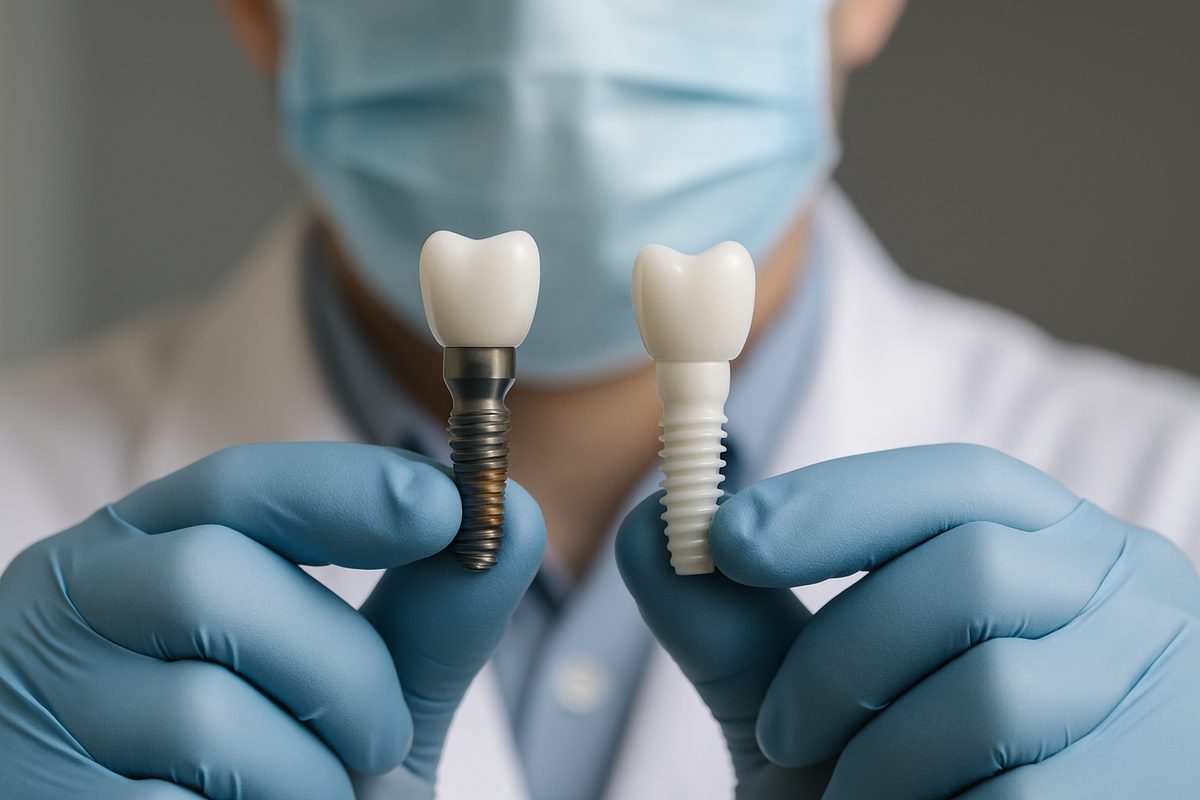
Titanium has been the standard for decades. It’s strong, lightweight, and bonds to bone through osseointegration, giving excellent long-term stability. Titanium alloys add strength for high bite forces. Downsides are rare metal sensitivities and, in thin gums, a grayish tint that can affect esthetics.
Zirconia (Ceramic) Implants
Zirconia implants are metal-free, white, and very attractive for front teeth or patients worried about metals. They show good resistance to corrosion and look more natural under thin gums. Long-term data is growing; zirconia can be slightly less flexible under heavy chewing forces compared with titanium.
Implant Components: Fixture, Abutment, Crown
An implant system has three parts: the fixture (root) placed in bone, the abutment (connector), and the crown (visible tooth). The fixture is titanium or zirconia; abutments can be titanium, zirconia, or a mix; crowns are porcelain, ceramic, or composite. Mixing materials lets dentists balance strength and esthetics.
How Implant Materials Affect Success and Longevity
Biocompatibility and Osseointegration
Materials must be accepted by bone and soft tissue. Titanium’s proven osseointegration means reliable bone healing. Zirconia is also biocompatible and may show favorable soft-tissue response. Good surgical technique and healthy bone are as important as material.
Corrosion, Wear, and Maintenance
Titanium resists corrosion but can wear under extreme conditions; zirconia resists corrosion well but can be more brittle. Regular dental hygiene, checkups, and protecting implants from clenching or grinding help materials last decades.
Esthetics and Gum Tissue Response
Material color and gum thickness shape the final look. White zirconia is often best for thin gums or front teeth, while titanium’s strength suits back teeth. Soft-tissue health around the implant also affects appearance over time.
How Dentists Choose Materials: What To Consider
Patient Health and Allergies
Doctors review medical history and allergies. Zirconia is an option for metal sensitivities; titanium is safe for most patients and widely supported by research.
Location in Mouth and Bite Forces
Front teeth need esthetics; back teeth need strength. Dentists often prefer zirconia or esthetic abutments in the front and titanium fixtures in the back for durability.
Cost, Availability, and Long-Term Planning
Titanium implants tend to be more widely available and sometimes less expensive. Long-term plans, such as replacing multiple teeth or future restorations, influence the best choice. For information on financing, reach out to our team.
Technology That Improves Material Outcomes
CBCT and Digital Planning
3D CBCT scans show bone volume and density to match implant type and size to each patient. Digital planning reduces surprises and helps pick the right material and position.
Computer-Guided and Robotic Placement
Guided surgery, including Yomi robotic guidance, improves placement accuracy and protects implant components by reducing surgical trauma and ensuring the implant is seated in ideal bone.
Aarohi Dental’s Approach to Implant Materials and Care
Aarohi Dental in New Bedford blends CBCT imaging, computer-guided planning, and Yomi robotic assistance to choose materials that suit each patient’s health, smile goals, and budget. The team evaluates bone, gum esthetics, and medical history, then recommends titanium or zirconia and offers financing to make implant care accessible.
Short FAQ
What are implants made of: Most implants are titanium or zirconia; fixtures are usually titanium alloys or zirconia, with crowns made from porcelain or ceramic. Are some materials better for people with allergies: Yes — zirconia offers a metal-free option for patients with metal concerns. Discuss your medical history and preferences with your dentist, especially if you’re asking what are implants made of in New Bedford, MA.