
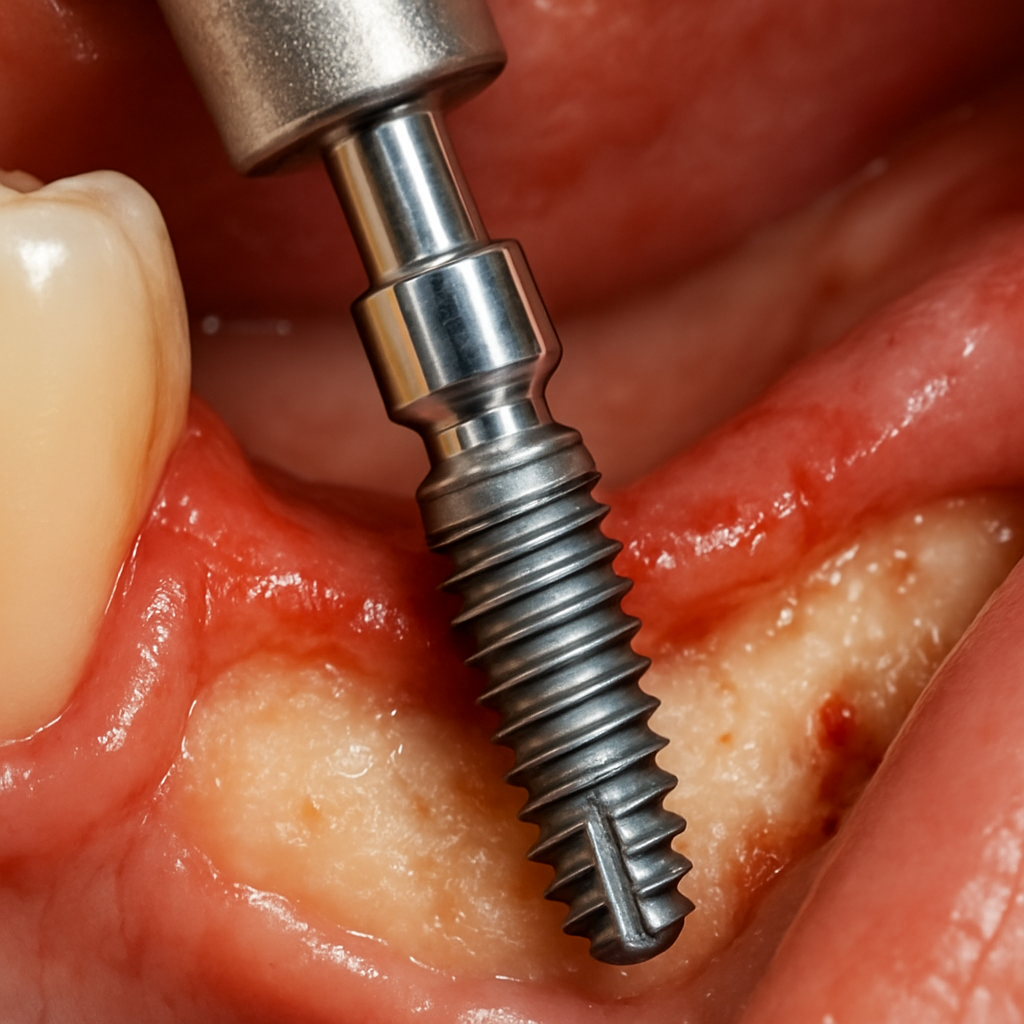
Considering tooth replacement? Many people choose titanium dental implants because they reliably replace missing teeth and support long-term oral health. This article explains what titanium tooth implants are, who makes a good candidate for them, what the treatment looks like, and how to lower risks. You’ll learn how titanium bonds with bone, the main benefits compared with other materials, and when a short exam and CBCT scan can clarify if titanium tooth implants in New Bedford, MA are right for you.
What are titanium dental implants?
Titanium tooth implants are small metal posts placed into the jaw to act as artificial tooth roots. Titanium is used because it osseointegrates — the metal fuses with bone over time to create a stable foundation for tooth crowns, dental bridges, or denture supports. That bonding gives high strength and predictable long-term results, which is why titanium remains the most common dental implant material.
Key benefits of titanium tooth implants
Titanium tooth implants offer durability and high success rates. They handle the forces of chewing well, so they work for single tooth crowns, multiple-tooth bridges, and full-arch restorations. Compared with zirconia, titanium has a longer track record and more clinical data backing its use. Zirconia may offer esthetic benefits in some cases, but titanium provides proven strength and longevity for most patients.
Who is a good candidate for titanium tooth implants in New Bedford, MA
Health and lifestyle factors
Good candidates are generally in stable overall health. Certain medical conditions — uncontrolled diabetes, recent cancer therapy, or heavy smoking — can increase risk of implant failure. Smoking, in particular, slows healing and raises the chance of infection. Your medical history and current health will guide whether dental implants are advisable now or after treatment and lifestyle changes.
Oral factors
Adequate bone volume and healthy gums are important. Significant bone loss from long-term tooth absence or periodontal disease may require bone grafting before dental implant placement. Gum health must be addressed to prevent complications like peri-implantitis. A CBCT scan helps measure bone and plan exact implant size and position.
What to expect during the dental implant process
Consultation and planning
Expect a thorough exam, review of medical history, and 3D imaging (CBCT). Your dentist will discuss options, timing, and whether bone grafting or gum therapy is needed. A clear plan outlines steps, estimated healing times, and costs.
Surgery and healing
Surgery typically places the titanium post into the jaw under local anesthesia. Healing (osseointegration) usually takes a few months before the final tooth crown or dental bridge is attached. Temporary teeth can often be provided during healing for appearance and function.
Technology that can improve outcomes
Computer-guided planning and robotic guidance improve precision and reduce surgical variability. These tools help place dental implants in the ideal position and can lead to faster recovery and more predictable results.
Risks, maintenance, and lifespan
Risks include infection, surgical complications, and peri-implantitis (gum inflammation around the dental implant). Good home care, regular dental checkups, and early treatment of gum problems greatly reduce these risks. With proper care, titanium dental implants can last decades; occasional repairs or restorations may be needed for crowns or attachments.
Why consider a practice with advanced dental implant technology
A practice using CBCT, computer-guided planning, and robotic tools can improve accuracy and comfort. At Aarohi Dental in New Bedford, MA, Dr. Sathish G. Palayam and Dr. Minal Narayan combine implant and restorative expertise with technologies like Yomi robotic guidance and LANAP laser therapy for gum health. They also offer financing to help make treatment manageable.
Find Out if Titanium Dental Implants Are Right for You
If you’re curious, contact us to schedule a consultation to review your medical history and have a short exam and CBCT scan. Bring a list of medications and questions. A focused evaluation will clarify whether titanium tooth implants in New Bedford, MA are the best option for restoring your smile and function.

