
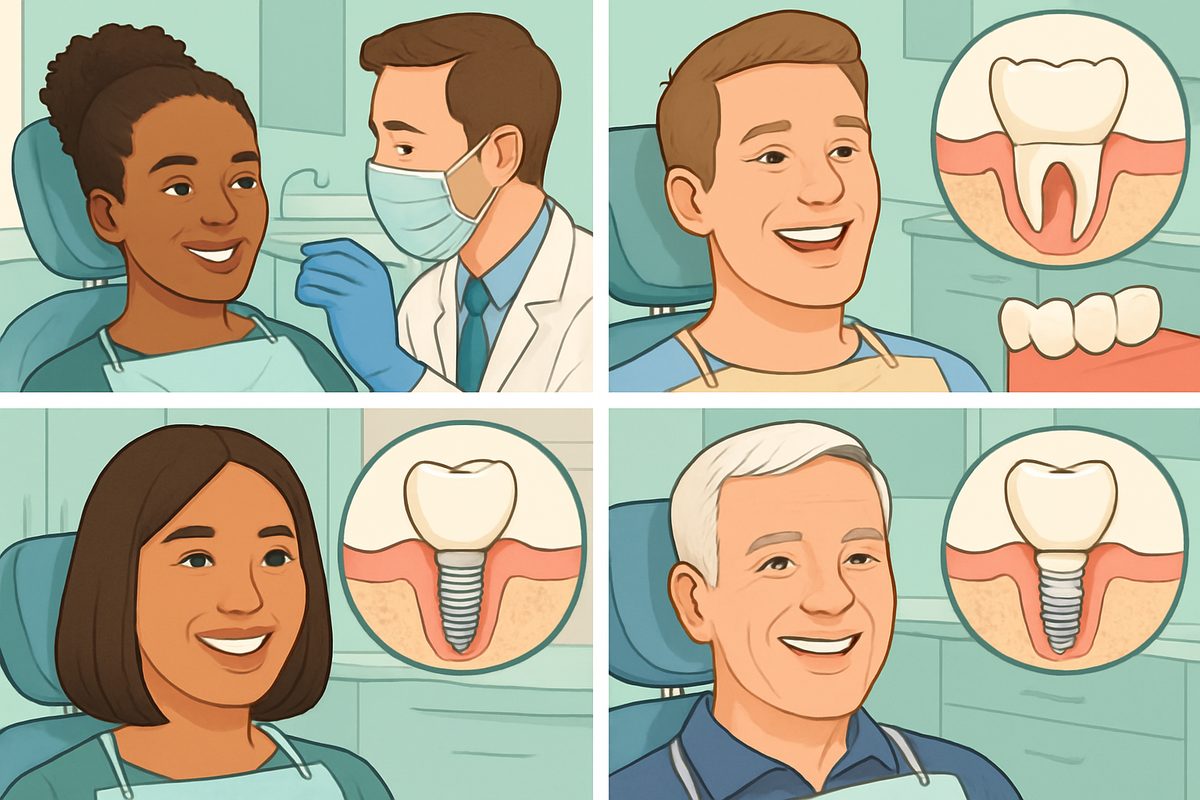
Dental implants are a long-term way to replace missing teeth by anchoring a titanium post into the jaw and restoring it with a tooth crown, dental bridge, or denture. This post explains the typical dental implants procedure steps, what to expect at each stage, and a simple timeline from first consult to final restoration. Typical outcomes include stable chewing, improved speech, and a natural look. Most patients finish treatment in 3–9 months, depending on extra procedures like bone grafts.
Who is a good candidate for dental implants?
Good candidates are adults with healthy gums and adequate jawbone to support a dental implant. Medical and lifestyle factors matter: uncontrolled diabetes, heavy smoking, and active gum disease can raise risks. Insufficient bone may require grafting. Many contraindications can be managed—blood sugar control, smoking cessation programs, or preparatory grafting—so an exam and medical history help determine candidacy for dental implants procedure steps in New Bedford, MA.
Step 1: Consultation and digital treatment planning
The initial visit includes a medical and dental history, oral exam, and impressions or intraoral scans. Cone-beam CT (CBCT) imaging maps bone, nerves, and sinuses so the team can plan the dental implant location and size. Good planning reduces surprises, shortens chair time, and improves predictability. Expect a discussion of options, timeline, costs, and any needed pre-treatment.
Step 2: Pre-surgical work (extractions, bone grafts, sinus lifts)
If a damaged tooth must be removed, that extraction may occur before dental implant placement or at the same time. Bone grafts or sinus lifts are done when bone volume is low; they use graft material to rebuild the site and typically need 3–6 months to heal before placing a dental implant. Your provider will explain materials and expected healing at your consult.
Step 3: Dental Implant placement surgery
Placement usually happens under local anesthesia, sometimes with sedation. The surgeon makes a small incision, drills a pilot hole, and places the titanium dental implant into bone, then sutures the site. Guided or robotic-assisted placement (like Yomi systems) can improve accuracy and minimize trauma. The appointment often takes 30-90 minutes per implant depending on complexity.
Step 4: Healing and osseointegration (what to expect)
Osseointegration is the 3–6+ month period when bone fuses to the dental implant. Mild soreness, swelling, and light bruising are normal early on. Most patients can eat soft foods and use temporary tooth crowns or removable teeth during healing. Follow-up visits monitor healing and ensure the dental implant is integrating before moving to restoration.
Step 5: Abutment and final tooth crown (restoration)
After integration, an abutment connects the dental implant to the final restoration. Impressions or digital scans capture the bite and tooth shape. Tooth crowns are commonly porcelain or zirconia; dental bridges or implant-retained dentures are options for multiple teeth. The team performs final fit, bite checks, and polishing to ensure comfort and function.
Recovery, aftercare, and timeline summary
Immediate care: control pain with meds, use ice, eat soft foods, and keep the area clean. Watch for heavy bleeding or severe pain. Typical timeline: consult and imaging (week 0), any extractions/grafts (0–6 months healing), dental implant placement (then 3–6 months healing), abutment and final tooth crown (month 4–9). Your timeline may vary with additional procedures.
Common risks and how they’re minimized
Risks include infection, nerve injury, sinus problems, or dental implant failure. Clinicians reduce these with thorough imaging, sterile technique, precise planning, experienced surgical skill, and regular follow-up.
Questions to ask about your dental implants procedure steps
– How many dental implants have you placed? – Do you use CBCT or guided/robotic placement? – What sedation options are available? – What is the expected timeline and cost? – What is the follow-up and warranty policy?
Why advanced technology matters for dental implants
CBCT, computer-guided planning, and robotic guidance improve dental implant accuracy, reduce surgery time, and lower recovery times. When combined with an experienced team, these tools make predictable outcomes more likely for dental implants procedure steps in New Bedford, MA.
About Aarohi Dental and the dental implant team
Aarohi Dental in New Bedford, MA offers dental implant-focused care with a multi-disciplinary team. Dr. Sathish G. Palayam specializes in implant surgery and laser periodontal therapy; Dr. Minal Narayan focuses on restorative and cosmetic dentistry to finish natural-looking results.
Get a Personalized Dental Implant Consultation in New Bedford, MA
To learn personalized dental implants procedure steps in New Bedford, MA, contact us to request a consult, bring your medical history, and ask about financing and imaging. The team will review options and create a clear plan tailored to your needs.

