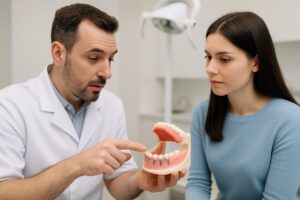

This article answers the question “Are Teeth Implant Side Effects Dangerous? What To Know.” You’ll learn the common short-term reactions after implant surgery, the rarer but serious complications to watch for, simple ways to manage symptoms, and clear signals for when to seek urgent care. By the end you’ll have practical next steps to protect your recovery and know who to call if something feels wrong. The phrase teeth implant side effects is used here to focus the topic.
Common short-term teeth implant side effects
After implant surgery, mild side effects are normal and usually get better within days to a few weeks. These are part of healing and rarely dangerous when you follow aftercare instructions.
- Mild pain and soreness — worst the first 48–72 hours, improves with pain medicine; usually gone in 1–2 weeks.
- Swelling and bruising — peaks 2–3 days after surgery, then slowly subsides over 1–2 weeks.
- Light bleeding — minor oozing for 24–48 hours is common; should not be heavy or continuous.
- Minor numbness or tingling — mild temporary numbness may occur and often improves over days to weeks.
- Temporary difficulty chewing or speaking — eating soft foods and practicing speech helps; function returns as swelling and discomfort ease.
If any of these symptoms get worse after the first week or don’t show steady improvement, contact your dental team for advice.
Less common but serious teeth implant side effects to watch for
These complications are uncommon but need fast attention. Early treatment lowers the chance of lasting problems.
Infection
Warning signs: increasing or severe pain, fever, pus from the site, a bad taste or smell, or swollen, red gums that worsen. Causes include bacteria entering the surgical site or poor oral hygiene. Treatment often includes antibiotics and possible drainage. A dentist or oral surgeon must assess it quickly to prevent spread.
Nerve injury / persistent numbness
If numbness or tingling in the lip, chin, tongue, or gums does not improve or becomes worse, it could signal nerve injury from implant placement. Some numbness is temporary, but persistent or increasing loss of feeling needs evaluation. Referral to a specialist or imaging may be required to determine if the implant is impinging on a nerve and whether removal or other treatment is needed.
Implant failure or loosening
Signs include movement of the implant, increasing pain, or a loose restoration. Causes can be failed osseointegration (the implant did not fuse with bone), infection, or excessive bite forces. Your team will take X-rays to check bone integration and may recommend removal, revision surgery, or a new treatment plan.
Sinus problems (upper jaw)
For upper jaw implants, the sinus can be affected. Symptoms include persistent sinus pain, pressure, or chronic sinusitis after surgery. If you have ongoing sinus issues, an evaluation by an ENT or your oral surgeon is warranted to check for implant-related sinus perforation or infection.
How to manage and reduce risk of teeth implant side effects
Good preparation and careful aftercare cut the chance of problems and speed healing.
- Pain control: Take prescribed or recommended pain medicine as directed.
- Icing and rest: Ice the cheek for 10–20 minutes on/off first 48 hours and avoid heavy activity.
- Oral hygiene: Keep the area clean with gentle brushing and saltwater rinses after 24 hours.
- Follow antibiotics: If prescribed, finish the full course even if you feel better.
Lifestyle and health factors matter: stop smoking before and after surgery, keep diabetes under control, and treat gum disease before implants. Pre-op planning also reduces risk — look for thorough imaging like CBCT scans, discuss bone grafting if needed, and have clear expectations about healing time.
When to contact your dentist or go to the ER — and choosing the right provider
Seek immediate care or call emergency services for heavy uncontrolled bleeding, rapidly spreading swelling (especially around the throat), high fever, severe breathing or swallowing difficulty, or sudden severe numbness. For other concerning signs—worsening pain, persistent drainage, or a loose implant—contact your dentist or oral surgeon the same day.
To lower risk, choose a provider experienced with implants. Ask about complication rates, whether they use 3D imaging for planning, and what post-op follow-up is included. A team that provides clear pre-op instructions and prompt post-op care helps prevent minor side effects from becoming serious.
Most post-implant symptoms are mild and manageable. If you’re ever unsure, contact your dental care team early — quick action is the best way to avoid dangerous complications.