
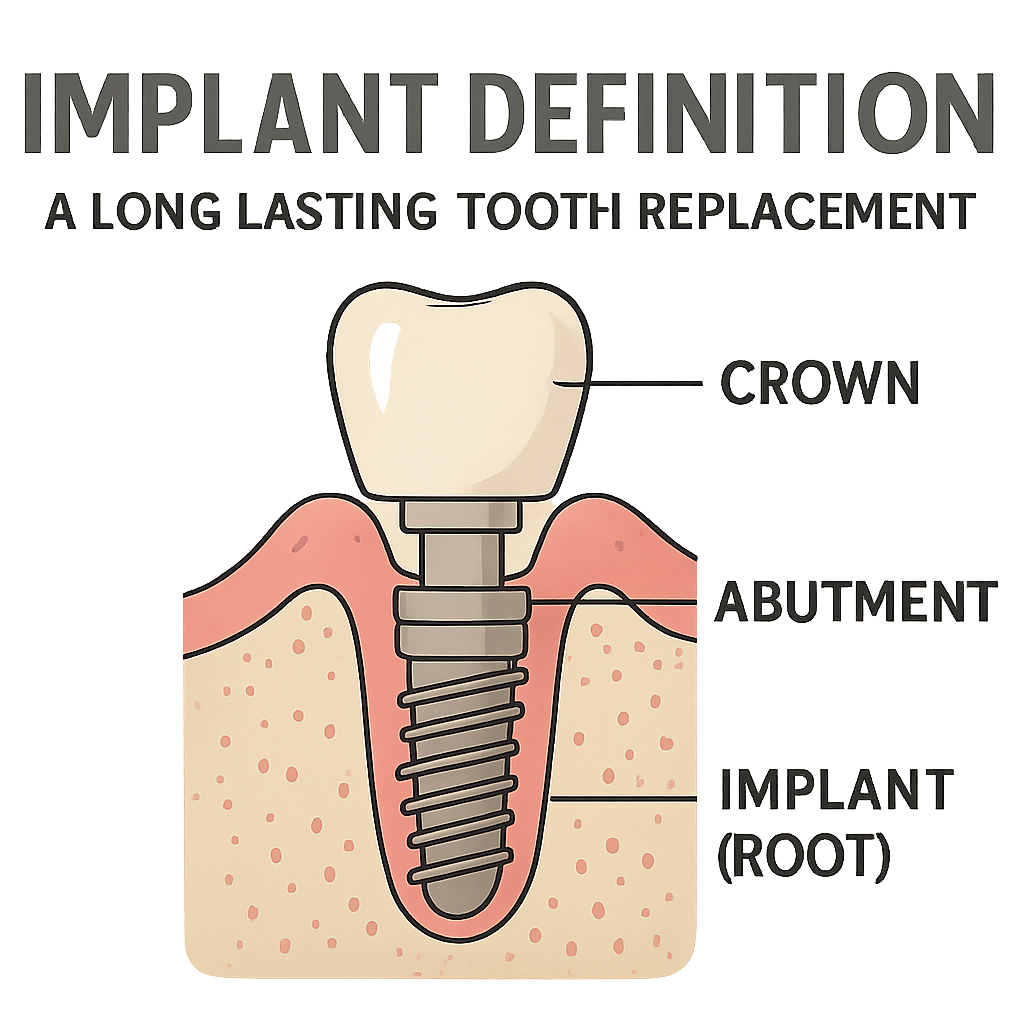
If you’ve searched “implant definition,” you’re likely wondering what a dental implant is and whether it could help you. This short guide provides a clear definition of implants, explains who they’re for, and previews what you’ll learn about candidacy, implant types, treatment steps, risks, costs, and how to take the next step. If you’re near New Bedford, MA, and curious about “implant definition New Bedford, MA,” this guide will help you ask the right questions at your consultation.
What is a dental implant? (implant definition)
A dental implant is a small post, usually made of titanium or zirconia, placed in the jaw to replace a missing tooth root. An abutment connects the post to a crown, bridge, or denture. This structure looks and acts like a natural tooth: it stabilizes chewing, helps preserve jawbone, and supports speech. The implant root prevents nearby teeth from drifting and helps maintain a firmer facial structure over time.
Who is a good candidate for dental implants?
Oral health basics
Good candidates have healthy gums and enough jawbone to hold the implant. Active gum disease or severe bone loss can reduce the success rate. Often, gum disease must be treated first, and bone grafts can rebuild bone if needed.
Medical and lifestyle factors
Certain health issues affect healing: uncontrolled diabetes, cancer treatments, heavy smoking, or medications that change bone healing can raise risks. Your provider will review your medical history to see if extra precautions are needed.
Age and expectations
Adults of most ages can get implants once jaw growth is finished. Success depends more on health and realistic expectations than on age. Implants require a commitment to oral care and follow-up visits.
Types of implants and common treatment options
Options include single-tooth implants, implant-supported bridges for multiple missing teeth, and full-arch solutions (fixed or fixed-to-removable). Materials are usually titanium or ceramic (zirconia). Some cases allow immediate loading—placing a temporary crown the same day—while others require a healing period before the final restoration.
What to expect during the implant process
Typical steps: consultation, exam, and CBCT 3D imaging; digital treatment planning; surgical placement of the implant; a healing phase for osseointegration (bone fusing to the implant); and final crown or denture attachment. Timeline ranges from a few weeks (with immediate loading) to several months if healing and grafts are needed.
Risks, success rates, and aftercare
Dental implants have high success rates—often over 95%—with proper care. Risks include infection, implant failure, nerve irritation, and sinus issues for upper-jaw implants. Aftercare: brush and floss daily, attend regular dental check-ups, and avoid tobacco to support long-term success.
Cost and paying for implants
Costs vary by complexity, materials, and additional procedures such as bone grafts or extractions. Many practices offer dental financing, in-house payment plans, and help with insurance claims. Dental insurance may cover portions of the restoration, but it often limits benefits for implants.
About Aarohi Dental and its implant technology
Aarohi Dental in New Bedford, MA, offers comprehensive implant care using modern tools to improve accuracy and comfort. Technologies include Yomi robotic implant guidance, CBCT 3D imaging, computer-guided implant planning, and LANAP laser treatment for gum health.
Meet the doctors
Dr. Sathish G. Palayam — DDS focused on implant surgery, CBCT planning, and LANAP laser therapy. Dr. Minal Narayan — DMD, experienced in restorative and cosmetic dentistry, handling esthetic implant restorations.
How to decide if implants are right for you — next steps
Schedule a consultation with a personalized exam and CBCT scan. Bring your dental and medical history, along with a list of questions about the implant definition, risks, timeline, and financing in New Bedford, MA. To learn if implants fit your needs, contact Aarohi Dental for an implant evaluation and clear next steps.

