When people ask about “government dental implants,” they’re usually asking whether public programs will pay for dental implants and how to get that help. This article gives clear, practical answers so you can know what’s realistic, what steps to take, and where to look for low-cost options. If you’re asking specifically about government dental implants near New Bedford, MA, read on for program rules, alternatives, and a checklist for your first appointment.
What “government dental implants” usually refers to
The phrase often means one of three things: coverage through veterans’ benefits, state Medicaid programs, or special community-funded initiatives. It can also mean short-term help from charities or mission clinics. Full, routine government-funded implant coverage is rare—most public programs limit prosthetic or surgical dental care, especially for adults.
Do government programs cover dental implants near New Bedford, MA?
Veterans (VA benefits)
The VA may pay for dental treatment in specific cases: service-connected dental loss, certain medical conditions, or if dental health affects a veteran’s ability to receive other VA care. Implants are sometimes covered when they’re medically necessary, but many cosmetic or routine implant requests are denied. Contact your regional VA dental clinic to get precise eligibility details.
Medicaid
Medicaid dental benefits vary by state. In Massachusetts, adult Medicaid typically covers emergency and basic dental services, but routine implant coverage for adults is rare. Some exceptions or special programs can exist for medically necessary cases. Check MassHealth dental policy and call your local Medicaid office to confirm current rules.
Medicare
Medicare generally does not cover routine dental care or dental implants. Parts A and B focus on hospital and medical services; dental treatments are excluded unless received as part of hospital care for another condition.
Other public or low-cost routes to explore
Community health centers and free clinics
Federally funded health centers and local free clinics sometimes offer basic dental care on a sliding scale. They rarely perform complex implant surgery, but they can help with exams, extractions, and referrals.
Dental schools and teaching clinics
Dental schools often provide lower-cost care delivered by students under faculty supervision. Some schools participate in implant programs or can coordinate staged treatment at reduced fees—expect longer timelines but significant savings.
Charitable programs and grants
Nonprofits, mission clinics, and charitable dental events occasionally assist with major dental needs. Availability is limited and often based on specific eligibility criteria. Search state dental associations, local charities, and national programs for occasional funding or mission trips.
How to check eligibility and apply
Verify your VA, MassHealth, or Medicare benefits first. Gather dental records, recent X-rays, and any medical documentation showing the necessity. Call benefits caseworkers or local public health departments to ask about preauthorization, waiting lists, or appeals. Keep clear notes and reference numbers for every call.
When government help isn’t available: affordable alternatives
Consider phased treatment (extract now, place implants later), removable prostheses, care at a dental school, nonprofit partnerships, or in-office financing and third-party medical credit. Dental tourism can lower costs but carries travel, follow-up, and complication risks—factor those in when making your decision.
How Aarohi Dental can help
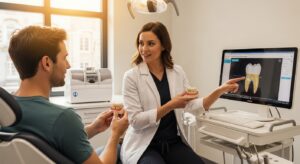
Aarohi Dental in New Bedford can review benefits, verify which government programs will cover costs, and outline affordable treatment plans. Our team offers implant consultations and financing, plus advanced technologies such as Yomi robotic implant guidance, CBCT imaging, and LANAP laser therapy. Dr. Sathish G. Palayam and Dr. Minal Narayan lead implant and restorative care, focusing on predictable outcomes and patient education.
Next steps — what to bring to your appointment
– Insurance/benefit info (VA/MassHealth/Medicare ID)
– Recent dental x-rays or records
– List of medical conditions and current medications
– Questions about timelines, preauthorization, and cost estimates.
If you’d like help determining whether government dental implants near New Bedford, MA are realistic for you, schedule a consultation to review benefits and practical options.